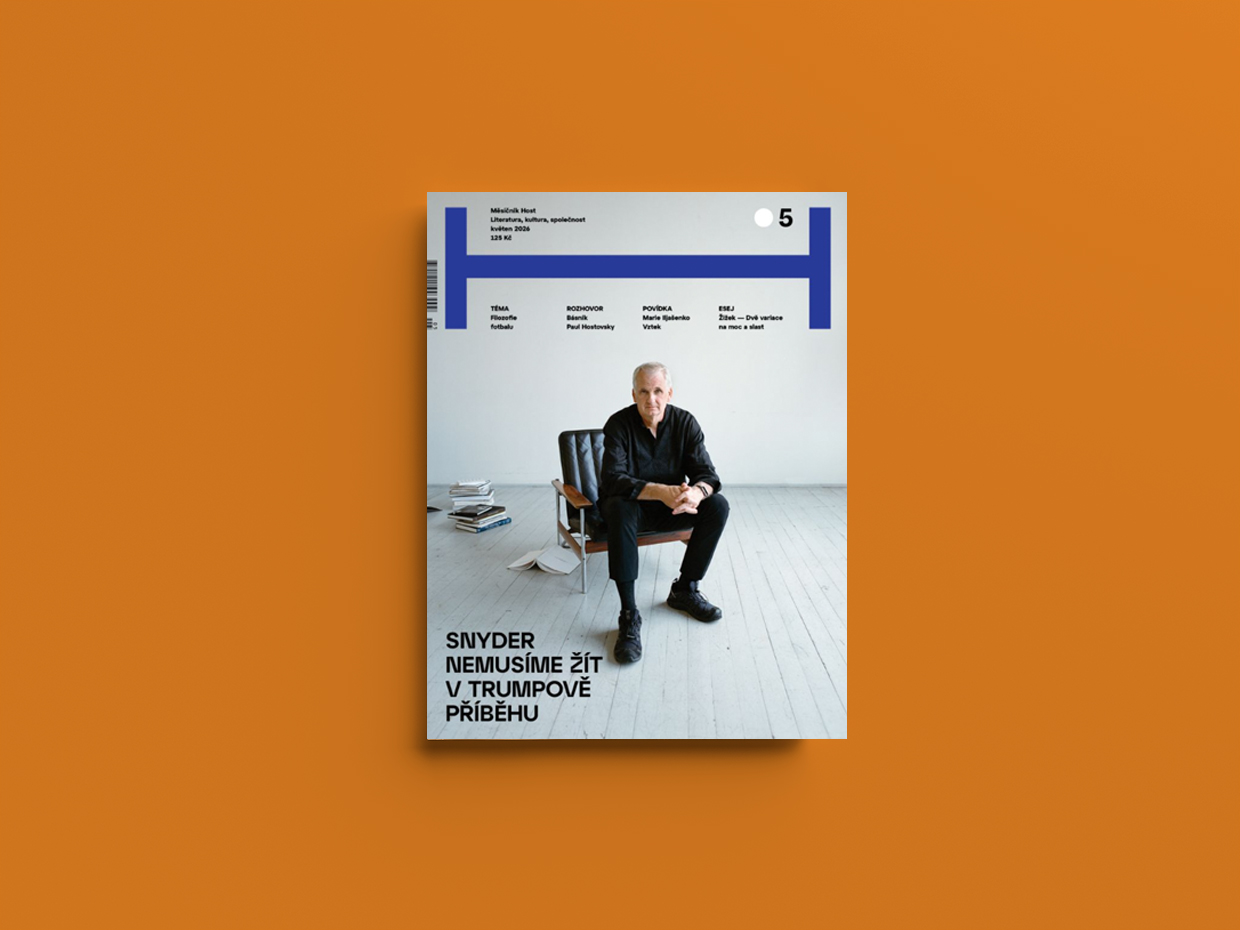
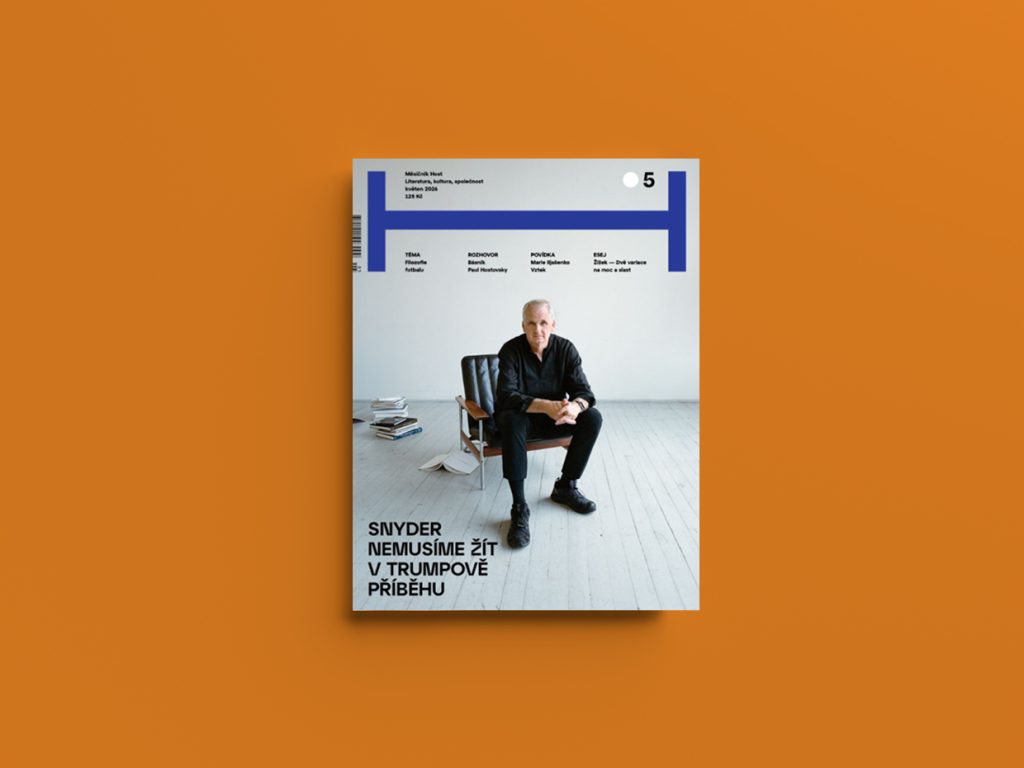
In Host (Czechia), Afghan-Czech journalist Fatima Rahimi discusses women’s football, Iran, and the co-opting of feminism. She calls out the hypocrisy of FIFA, which refused to heed Iran’s request to move its team’s matches scheduled to be held in California – home to a vocal Iranian diaspora – to Mexico, but ignored the plight of Iran’s women footballers who sought refugee status in Australia. ‘If there was a World Cup in empty gestures, FIFA would be among the favourites,’ Rahimi writes.
Noting that women’s football is now tolerated in Iran and their participation in the sport has been hailed as a breakthrough and an emancipation project, Rahimi warns of the risk of football being co-opted:
‘Feminist demands have been adopted and harnessed to strengthen existing power structures. Women’s football becomes a proof of equality, modernity and values, with women players cast as its visible face but not its authors. The question is not, therefore, whether football is part of politics. We already know that it is. The question is whether politics is the winner and whose bodies are paying the price.’
Football, money and metaphysics
Writer and publisher Martin Reiner recalls how, in the halcyon days of Czech football in the early 2000s, he came up with a novel idea for sponsorship. With the campaign ‘Feed Your Writer’, he hoped to persuade eleven rich and famous footballers to contribute to the fees of eleven leading though impecunious writers.
He managed to get the phone number of Vladimír Šmicer, the legendary Liverpool midfielder, who agreed to support a writer of his own choice, only to back out once he realised that it meant parting with his money, not just a kind word and an autograph.
Reiner regrets that ‘we weren’t able to carry out the second part of the project that envisaged our chosen writers penning odes to historically significant moments of Czech football history. What a victory of spirit over the ball that might have been!’
Football is a ‘cosmic happening’, claims philosopher Miroslav Petříček. Creative players understand this, he writes; they see the game not as a structure but as a process, and are ‘interested not in the immediate but rather the future state of play’. Petříček offers a ‘metaphysical interpretation of football’, whereby the only way to assess a player’s genius is by whether they obstruct the ball’s immanent teleology by the spectacular demonstration of their skills.
Also in the issue’s football dossier: the translation of an article by Mario Vargas Llosa on the 1982 World Cup in Spain, and excerpts from two books by German sociologist Hartmut Rosa examining the sport.
Havel in Davos
Host interviews historian Timothy Snyder, guest at the Book World Prague. The conversation turns to Canadian PM Mark Carney’s January speech in Davos and his reading of Václav Havel. According to Carney, the ‘Middle Powers’ have, in pretending to believe in the myth of the rules-based international order, been ‘living in a lie’, as Havel put it in his essay ‘The power of the powerless’.
The Czechs were sceptical, but Snyder says Carney got Havel right when he called for companies and countries to finally take their signs down, like Havel’s greengrocer, and reveal the illusion. ‘I do think that what Prime Minister Carney is talking about is feasible in the world, ’ says Snyder. ‘I think, though, it has to involve a coalition of actually existing countries. As I see it, the entity which would have a chance in the future, and a very good chance, in the sense of surviving and also providing a decent life for its citizens, would be something like the current EU plus Ukraine plus the United Kingdom plus Canada.’
Poetry and sign language
Jan Zikmund, speaks to Paul Hostovsky, one of the poets featured in Dinosauři v ulicích (‘Dinosaurs in the Streets’), an anthology of contemporary American poetry in Czech translation.
Growing up in the USA, Hostovsky was aware that his father Egon was a famous writer but knew precious little about his old country, let alone his language. His father, who died when Paul was 14, used to address him by the diminutive form of his name, Paulíček, though he had been otherwise quite distant, especially during the last years of his life. ‘It’s a small thing, but that diminutive suffix, or the memory of it, its echo – is all I have of my father’s affection. In a way, for me it contains a whole language, a whole country, a whole continent of refugees.’
Hostovsky works as a sign language interpreter and rejects the term ‘impairment’ as an ‘offensive euphemism from the medical establishment that sees deaf people as medical problems, as broken, as needing to be fixed or healed, rather than a linguistic and cultural minority with its own complex, visually stunning, gesturally musical airborne language and attendant culture … Sign language is – there’s no other word for it – symphonic. It is not linear the way spoken languages are, one discrete word following on the heels of the next. Rather, it is simultaneous: all the sections of the body’s orchestra creating meanings at the same time.’
Review by Julia Sherwood
