
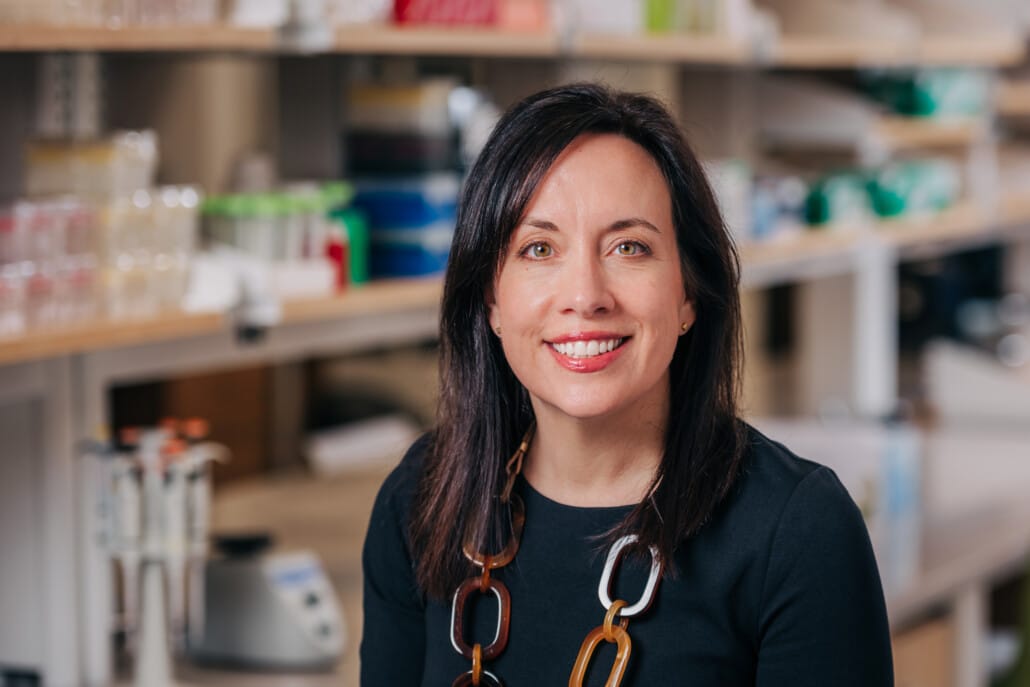
Meet Dr. Anna Thalacker-Mercer, tenured Associate Professor and Vice Chair for Training Programs and Mentorship for the Department of Cell, Developmental and Integrative Biology and the UAHSF Endowed Professor in Regenerative and Translational Medicine at the University of Alabama at Birmingham. An ASN member for more than 20 years, Dr. Thalacker-Mercer will be recognized at NUTRITION 2026 as both the recipient of the ASN Foundation-Novo Nordisk Foundation Henrik Dam Award for Scientific Discovery in Nutrition and an Excellence in Nutrition Fellow.
In a conversation with ASN Member Engagement Coordinator Sara Genell, Dr. Thalacker-Mercer discusses the science behind her Henrik Dam Award lecture, Extending Dam’s Legacy: Micronutrients and Metabolism as Architects of Skeletal Muscle Physiology, which will highlight discoveries from her laboratory and collaborative research exploring how nutrient availability regulates skeletal muscle biology. She shares emerging findings on amino acids, vitamin B12, mitochondrial biology, and proteostasis, and reflects on how the award will help advance high-risk, high-reward research with clinical relevance.
In the interview, she shares insights into the discoveries shaping her research, the value of mentorship and service, and why the mid-career stage represents a unique opportunity to influence the future of nutrition science.
Sara Genell: Thank you, Dr. Thalacker-Mercer, for joining me in this spotlight interview! To start, can you please introduce yourself and share what sparked your interest in nutrition with a focus on micronutrients, metabolism, and geriatric nutrition?
Dr. Anna Thalacker-Mercer: I am a tenured Associate Professor and Vice Chair for Training Programs and Mentorship for the Department of Cell, Developmental and Integrative Biology and the UAHSF Endowed Professor in Regenerative and Translational Medicine at the University of Alabama at Birmingham (UAB) where I also serve as Leader of the Research Development Core within the NIH Nathan Shock Center for the Biology of Aging and the Associate Director for the Center for Exercise Medicine.
My scientific journey has centered on understanding how nutrients and metabolism regulate skeletal muscle physiology across the lifespan, particularly in aging and disease. My early training during my PhD at Purdue University and postdoctoral work at UAB sparked my interest in how nutrient availability shapes muscle biology.
Over time, this evolved into a research program focused on identifying the nutrient and metabolic requirements that support skeletal muscle regeneration and physiology in older adults and individuals with chronic conditions. My lab has been especially interested in select nutritionally non-essential amino acids (serine, glycine, glutamine) and vitamin B12, and how they influence mitochondrial biology, muscle stem cell function, and overall metabolic health.
This work sits at the intersection of micronutrients, metabolism, and geriatric nutrition, with the ultimate goal of improving health span by preserving skeletal muscle health in vulnerable populations.
Genell: Congratulations on receiving the Henrik Dam Award for Scientific Discovery in Nutrition! What does this recognition mean to you at this point in your career?
Dr. Thalacker-Mercer: Thank you! This recognition is truly meaningful, particularly at this stage of my career. This award reflects the collective efforts of my trainees, collaborators, and mentors across multiple institutions, including Purdue, Cornell, and UAB. It also comes at a time when my program is expanding scientifically and translationally, moving from foundational discoveries in cell and preclinical models toward applications that can impact human health. It is especially meaningful to be recognized alongside being named an Excellence in Nutrition Fellow of the American Society for Nutrition this year.
Overall, the award reinforces the importance of continuing to push forward innovative, mechanistic work in nutrition science, particularly in areas like micronutrients and metabolism that are critical, but still underexplored, particularly in the biology of aging and geroscience.
Genell: You are being recognized for some major accomplishments this year, with the Henrik Dam Award and recognition as an Excellence in Nutrition Fellow of ASN! As recipient of the Henrik Dam Award, you will be giving a lecture at NUTRITION 2026. Can you tell us a little bit of what you have planned for this award lecture?
Dr. Thalacker-Mercer: My talk, “Extending Dam’s Legacy: Micronutrients and Metabolism as Architects of Skeletal Muscle Physiology”, will highlight discoveries from my lab and collaborative work that define how nutrient availability regulates skeletal muscle biology. I will specifically focus on our work demonstrating the essentiality of amino acids like serine, glycine, and glutamine (all nutritionally, non-essential amino acids) for muscle regeneration. I will also discuss emerging findings from our lab on vitamin B12, mitochondrial biology, and proteostasis.
Consistent with Henrik Dam’s legacy, my goal is to illustrate how fundamental discoveries in micronutrients and metabolism can reshape our understanding of physiology, in this case, skeletal muscle health across aging and disease.
Genell: This award includes more than $230,000 in support. How do you plan to use this funding to help advance your research?
Dr. Thalacker-Mercer: I will use this award to expand our cell and pre-clinical research and accelerate translation of our findings. The ultimate goal of my research program is to translate our findings to nutritional strategies to preserve/improve muscle health in older adults and those with chronic conditions. Importantly, the flexibility of this funding will enable us to pursue high-risk, high-reward questions that complement our ongoing research and move discoveries more rapidly toward clinical relevance.
Genell: You’ve mentioned that this is a particularly underexplored topic. What are the biggest unanswered questions in skeletal muscle physiology and healthy aging today?
Dr. Thalacker-Mercer: From a nutrient perspective, one of the biggest gaps is our limited understanding of interorgan and inter-organelle communication. While we know that metabolism is highly integrated, we still lack a clear picture of how signals are coordinated across tissues and within cells to regulate muscle physiology. Importantly, emerging tools now allow us to begin interrogating these lines of communication. My own work has contributed to defining how nutrient sensing and signaling shape muscle stem cell function and metabolic regulation, but there remains much to uncover about how these pathways integrate across systems. Ultimately, addressing these questions will be critical for developing targeted nutritional and metabolic interventions to promote healthy aging.
NUTRITION 2026: Where the Best in Science & Health Meet
Register Today
Genell: Switching gears a bit, I want to ask about your involvement with ASN. How has ASN supported you through your career progression?
Dr. Thalacker-Mercer: ASN has played a central role in my career development, both scientifically and as a leader. In addition to serving as Chair of the Energy and Macronutrient Metabolism GEM, I currently serve on the ASN Board of Directors as Director-at-Large for Nutrition Science Mechanisms. These leadership roles, along with opportunities to organize symposia and contribute to the annual NUTRITION meeting, have been invaluable for developing leadership skills and shaping the field. ASN has also provided a platform for building collaborations, mentoring trainees, and expanding my scientific network nationally and internationally. ASN has been instrumental not only in advancing my science but also in supporting my growth as a leader in the nutrition community.
Genell: The mid-career stage can be both exciting and challenging. Why is it important for ASN to recognize and invest in our mid-career members?
Dr. Thalacker-Mercer: For me, mid-career represents a critical transition point, where you are scaling your research program while also taking on leadership, mentorship, and administrative responsibilities. At this stage, investigators are often leading large, collaborative projects and mentoring the next generation of scientists. Recognition and investment at this stage are essential because they provide the resources and visibility needed to sustain momentum, foster innovation, and support the development of future leaders in the field.
Genell: Looking back, was there a mentor, collaboration, or career turning point that had a particularly important influence on your scientific path?
Dr. Thalacker-Mercer: Each stage of my career (University of Georgia, Purdue, UAB, Cornell) has been shaped by mentors and collaborations that were critical at that moment and beyond. These experiences provided not only scientific training but also exposure to interdisciplinary approaches that now define my work. I have also learned invaluable tools from so many colleagues (formal and informal mentors), experiences, and opportunities. I have learned to value each step along this path, both the easy and tough times, because each has given me tools to proceed in my career and has helped shape both my scientific perspective and my approach to mentoring others.
Genell: Thank you so much for participating in this interview! I encourage readers to secure their spots at NUTRITION 2026 to learn more about your groundbreaking discoveries!
The nutrition community brings together individuals with a wide range of experiences, perspectives, and ideas. This diversity is one of the greatest strengths of our professional society. Through this member spotlight series, we celebrate the accomplishments and impact of our members across the field.

