
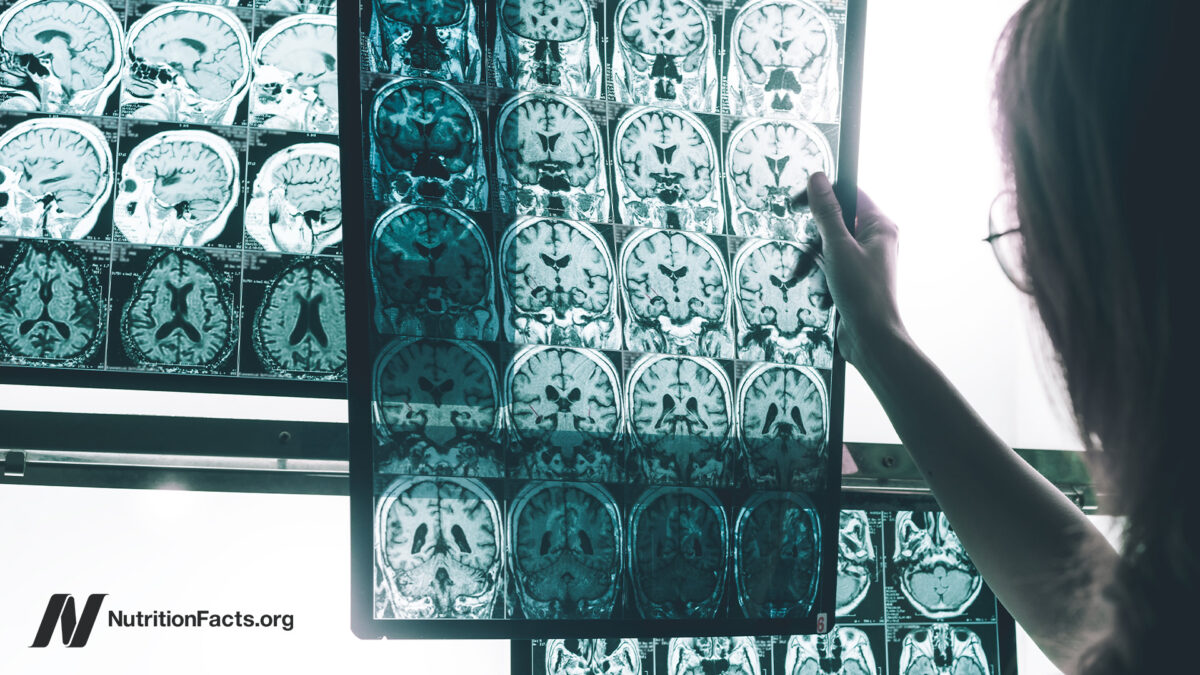
How can we avoid the breakdown products of pesticides that may increase the risk of Alzheimer’s disease as much as if you carried APOE e4, the so-called Alzheimer’s gene?
Although there is a growing list of Alzheimer’s disease susceptibility genes, those genes account for less than half of all Alzheimer’s cases. Here is the “single most compelling” piece of data on the potential control we have over the disease: When it comes to identical twins with the exact same genes, if one gets Alzheimer’s, the other usually does not. So, we have to think about all the other contributing factors beyond just genetics.
There’s a list of chlorinated pesticides, including DDE (a metabolite of DDT), that the U.S. Environmental Protection Agency has classified as probable human carcinogens. But in a study—which I’ve mentioned in a video on pesticides and cancer—blood levels of DDE and other pesticides were associated not with increased cancer mortality, but increased risk of other-cause mortality. This led researchers to speculate that this may be due to an associated increased risk of diabetes or dementia. I’ve talked previously about the diabetes link. What about dementia?
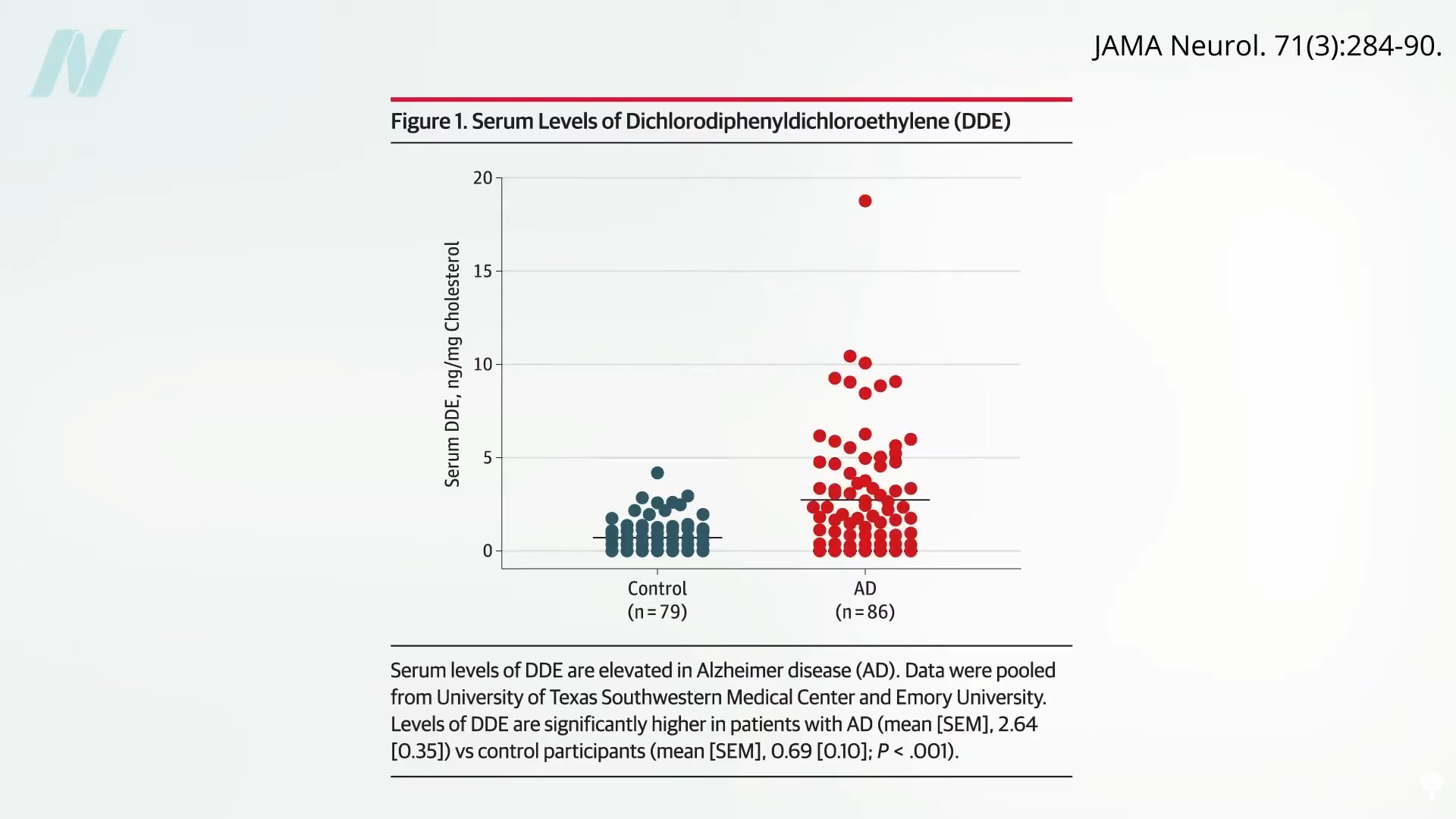
A research team at Rutgers found significantly higher blood levels of DDE in Alzheimer’s disease patients compared to controls, as you can see below and at 1:22 in my video Pesticides (DDT) and Alzheimer’s Disease.
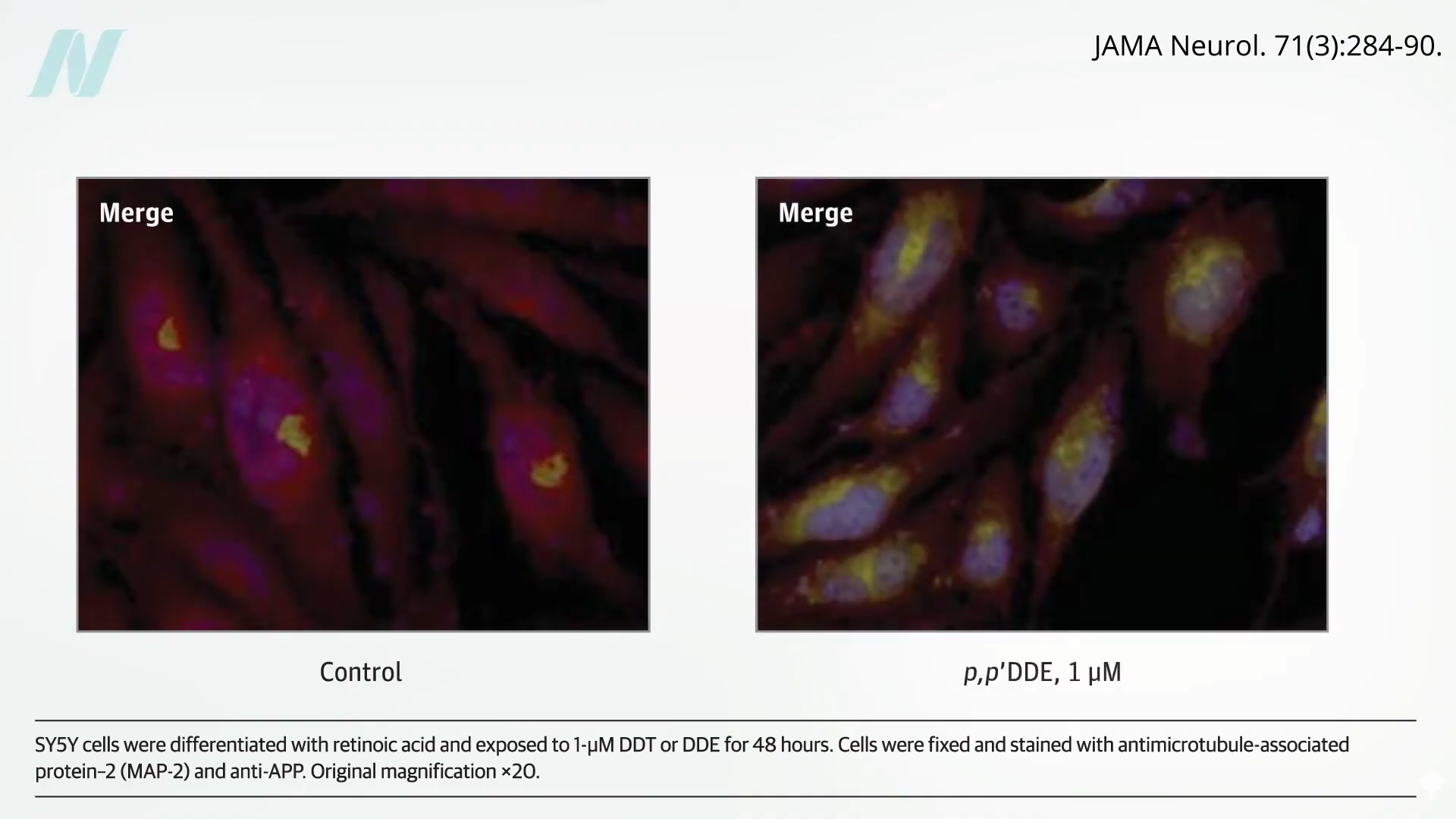
Autopsy studies show blood levels are a good proxy for brain levels. Those patients with the highest levels were at about four times the odds of having dementia from Alzheimer’s. And in a petri dish, DDE increases amyloid precursor protein levels in human brain cells, providing a potential mechanism. Below and at 1:48 in my video, you can see the levels of the sticky protein implicated in the development of Alzheimer’s disease before and after DDE is added at the levels one finds circulating in highly exposed individuals among the general population.
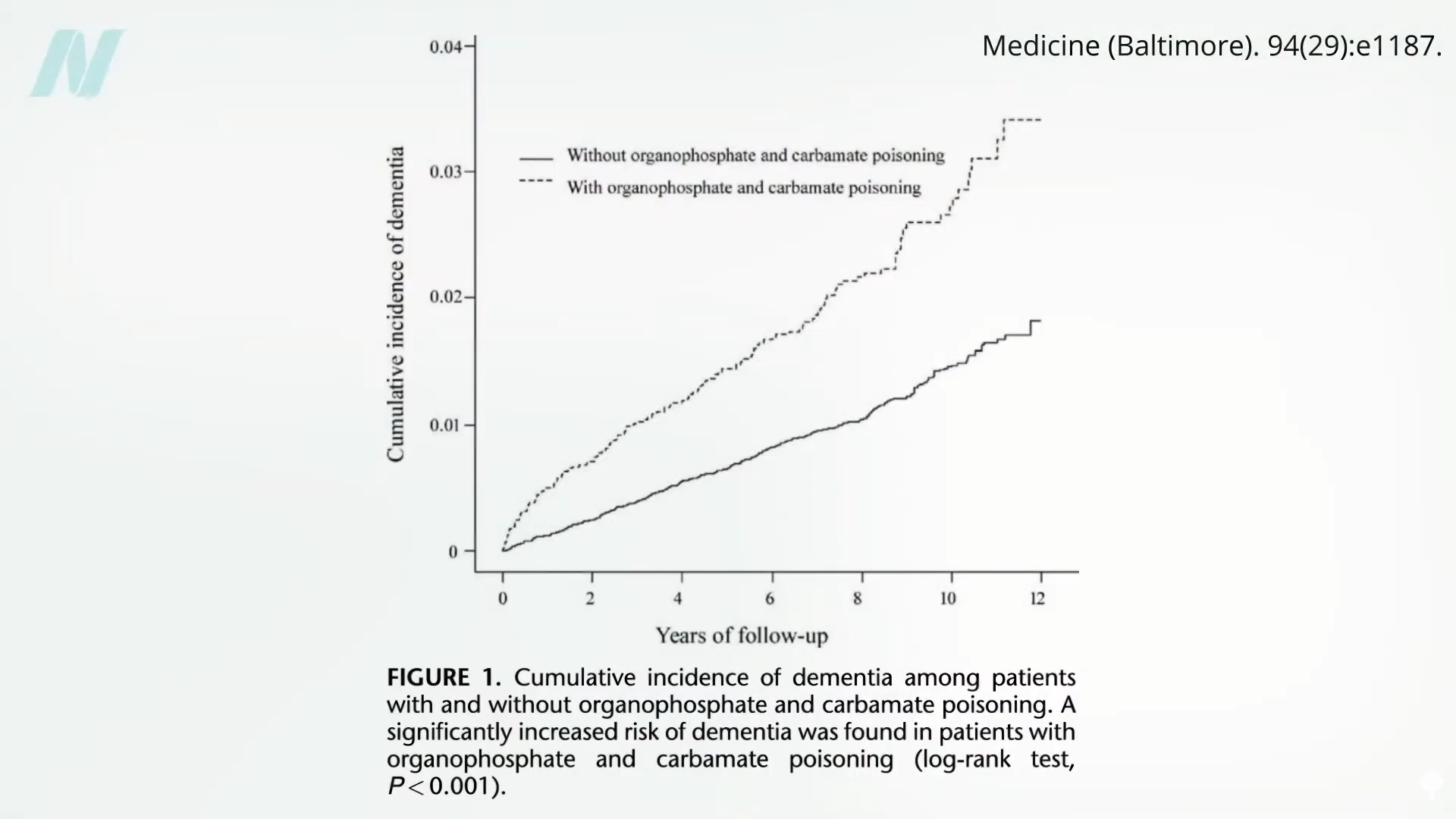
Put all these studies together, and there does indeed seem to be a link, consistent with data showing about a doubling of risk for developing dementia among those acutely pesticide-poisoned, as you can see below and at 2:01 in my video.
Among U.S. elders, DDT and its breakdown product DDE are also associated with increased risk of cognitive decline in general, which is shown below and at 2:08 in my video.
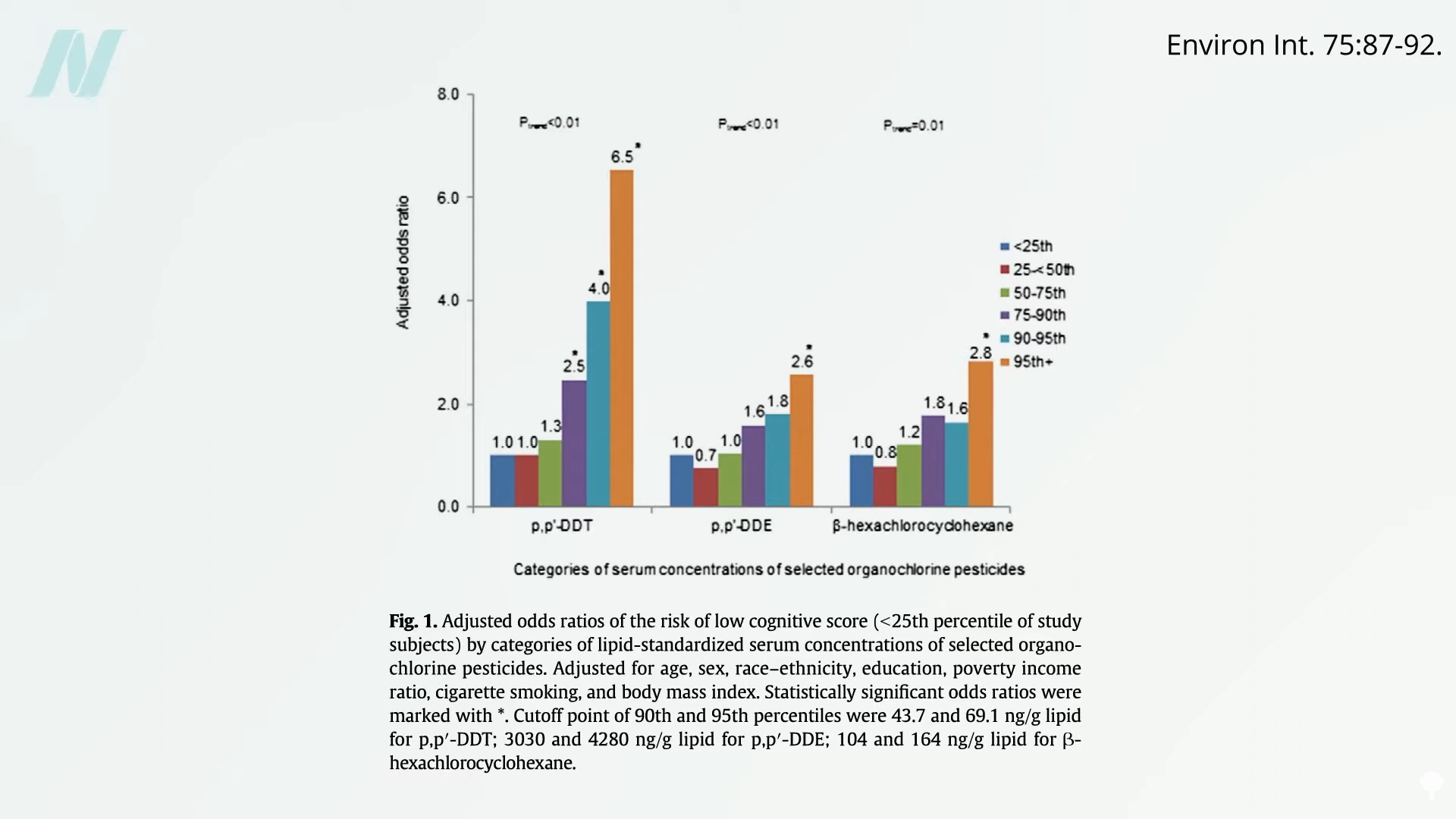
DDT was used extensively in the United States from the 1940s through the early 1970s. At its peak, we were churning out about 180 million pounds a year. And it is still in our bodies to this day, contaminating the bloodstreams of more than 90% of Americans, with DDE—the pesticide linked to quadrupling the odds of Alzheimer’s—found at the highest levels of all.
It’s still in our bodies because it’s still in the food supply. In a previous video on the topic, I noted that the levels of DDT, DDE, and other banned pesticides and pollutants were much lower in the breast milk from a vegetarian mother compared to breast milk of her non-vegetarian sister. The largest difference was noted for DDE, which was four times lower in the vegetarian sister. This is what you see across the board for these kinds of pollutants. Below and at 3:20 in my video, you can see the levels of dioxins and PCBs found in beef, chicken, pork, processed meat, eggs, fish, dairy products, and all plant foods put together when food samples were collected from supermarkets across the United States.
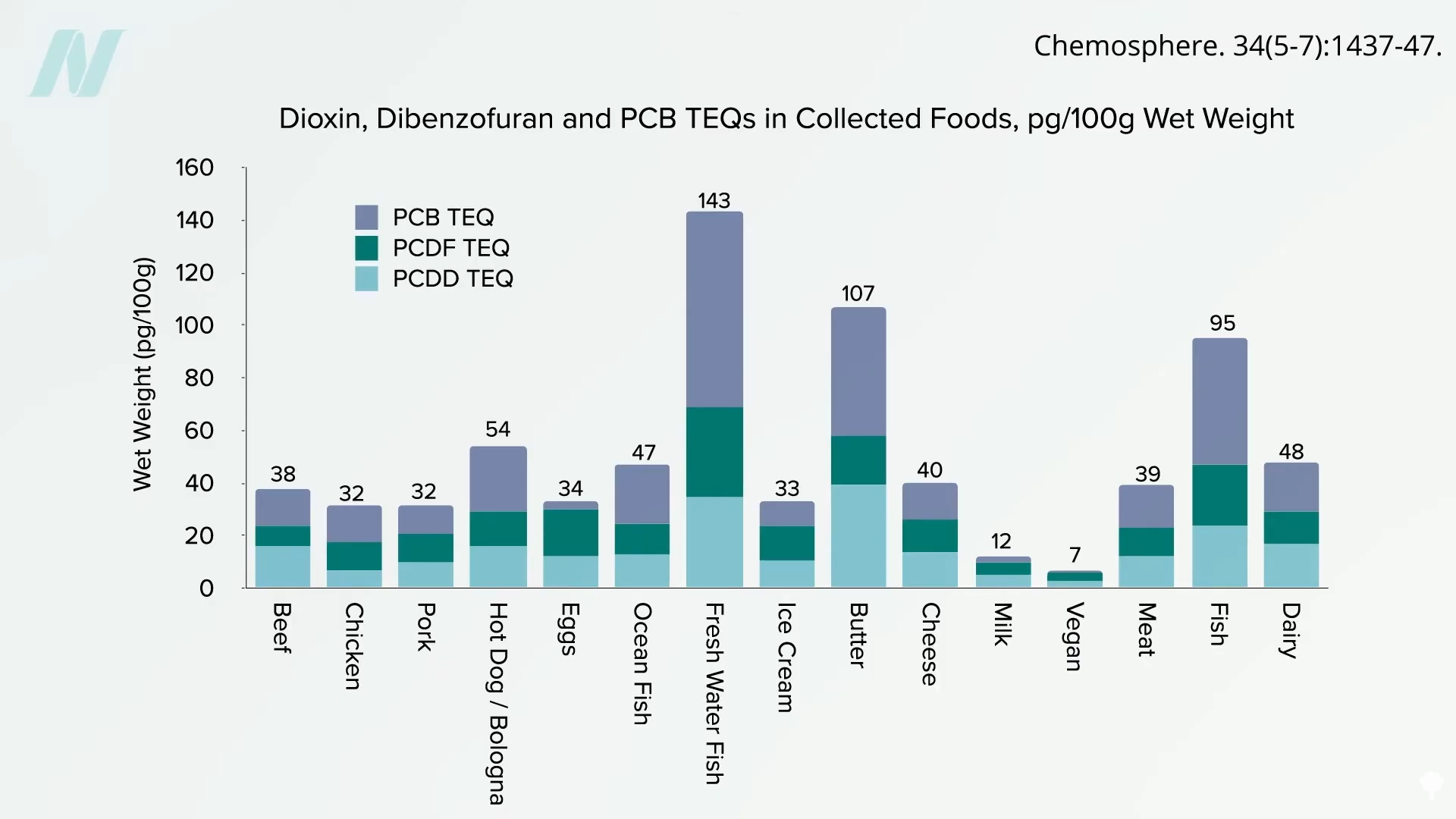
These toxins build up in the food chain, so it makes sense that the most contaminated foods are meat, fish, and dairy products. The toxin levels were found to be 5 to 10 times higher in meat, eggs, fish, and dairy compared to plant foods. Unfortunately, cooking doesn’t destroy pollutants like DDE—in fact, it may make them even more concentrated. And this is for a pesticide that may increase the risk of Alzheimer’s disease as much as if you carried the so-called Alzheimer’s gene APOE e4.
Doctor’s Note
The video I mentioned is Pesticides and Cancer Risk.
For more videos on Alzheimer’s disease, check out the Alzheimer’s topic page.
