
How did the meat industry, government, and cancer organizations respond to the confirmation that processed meat, like bacon, ham, hot dogs, and lunch meat, causes cancer?
“It is rare, in the history of nations, that one finds good reasons to render homage to the generosity and altruism of governments and those in power: the birth of the International Agency for Research on Cancer [IARC] presents one of those rare occasions.” It all started with a single letter from a grieving husband, relating his wife’s suffering after being diagnosed with cancer, cascading into an open letter calling for governments to devote half of 1% of their military budgets to fight for life by attacking one of the greatest plagues that weighs on humanity. And 18 months later, the IARC was born in the World Health Organization. What was its overarching motive? Cancer prevention.
As I discuss in my video, IARC: Processed Meat Like Bacon Causes Cancer, the IARC is best known for its monographs, book-sized reports evaluating whether or not some suspected carcinogen does in fact cause cancer. They are “generally accepted as close to a final word” as there is on whether or not something is carcinogenic. And its 114th monograph, published in 2018, focused on meat. After considering more than 800 different studies and thoroughly reviewing the scientific literature, a group of 22 experts from 10 countries concluded its 500-page report by saying, “Consumption of red meat is probably carcinogenic to humans (Group 2A).” But processed meat was placed as a Group 1 carcinogen, the highest level of certainty, meaning that according to the best available evidence, the consumption of processed meat causes cancer.
So, that means foods like bacon cause cancer. Ham, hot dogs, breakfast links, and lunch meat cause cancer. But its definition also includes, for example, turkey deli slices. Specifically, eating processed meat causes colorectal cancer, cancers of the colon or rectum, which is the second most deadly cancer worldwide, after lung cancer, which is caused largely by smoking. “Colorectal cancer is the second leading cause of cancer death in the U.S.,” as well, and it doesn’t just strike older people. It is also a leading cause of cancer and death from cancer earlier in life.
The meat industry wasn’t happy, calling it a “dramatic and alarmist overreach.” Speaking of dramatic and alarmist overreach, one agricultural group in Italy sent out a press release: Just say no to terrorism on meat.
The gloves were off. The meat industry in Canada tried to pressure the government to cut off funds to the IARC, asking the Health Minister to pull all funding from the agency after it dared to question meat. The U.S. meat industry did the same thing. It’s no surprise that the IARC is “under siege by corporate interests” trying to challenge their cancer evaluations on Monsanto’s Roundup pesticide and meat, discredit the agency, and undermine financial backing. For example, internal documents have revealed Monsanto scientists “casually discussing ‘ghost-writing’ scientific papers and suppressing science that conflicts with corporate assertions of Roundup’s safety.”
The chemical industry has joined the corporate cacophony, calling the IARC monographs “dubious and misleading.” These are classic strategies straight out of the tobacco industry playbook. “But there is little to suggest that, as a corporate actor, ‘Big Tobacco’ differs fundamentally from, eg, ‘Big Booze’ or ‘Big Food.’”
One recurring corporate talking point is that the IARC never met a carcinogen it didn’t like. But the vast majority end up being categorized as just possibly carcinogenic to humans, or there really aren’t sufficient data to make a determination either way, as you can see below and at 4:20 in my video.
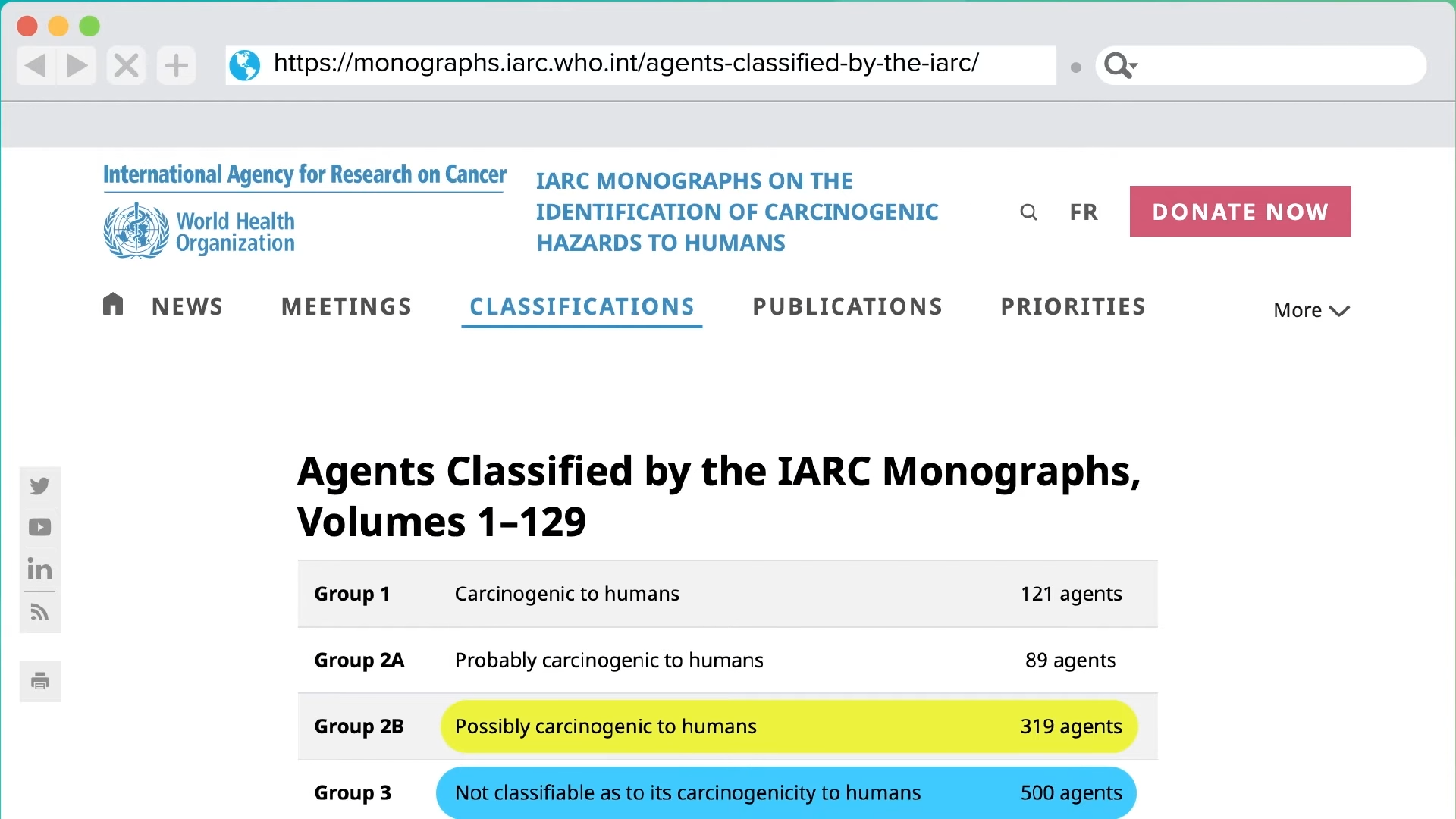
The agency only spends time looking at substances for which there is already “an existing body of scientific literature indicating a degree of carcinogenic hazard to humans.” So, no wonder many of them end up, indeed, carcinogenic.
How did the IARC respond to all the criticism? The World Health Organization received questions, concerns, and clarification requests after the publication of its meat and cancer report. It basically replied: Hey, we never told anyone to stop eating processed meat—your body, your choice. The report just indicated that consuming less of these products can reduce the risk of a leading cancer killer. So, you like cancer? You do you.
The IARC is just a research organization that evaluates evidence on what causes cancer; after that, what you do with that information is up to you. The American Cancer Society was nice and clear when it came to alcohol. When it comes to cancer, “it is best not to drink alcohol.” But the organization got a bit wishy-washy with processed meat, suggesting people can get away with just limiting their intake. The European Commission was a little clearer. To reduce our risk of cancer, we should eat lots of whole grains, pulses (which are beans, split peas, chickpeas, and lentils), fruits, and vegetables; limit sugary, fatty, salty foods; and straight-up avoid soda, sausage, and other processed meats. After all, in answering the question of how much meat is safe to eat, the IARC replied that it’s unknown whether a safe level exists, period.
Doctor’s Note
So, How Much Cancer Does Processed Meat Cause? That video is coming up next.
And, it’s not just cancer. For example, see The Effects of Processed Meat on Lung Function.
I previously covered Monsanto and its Roundup pesticide (now owned by Bayer), see related posts below.
