
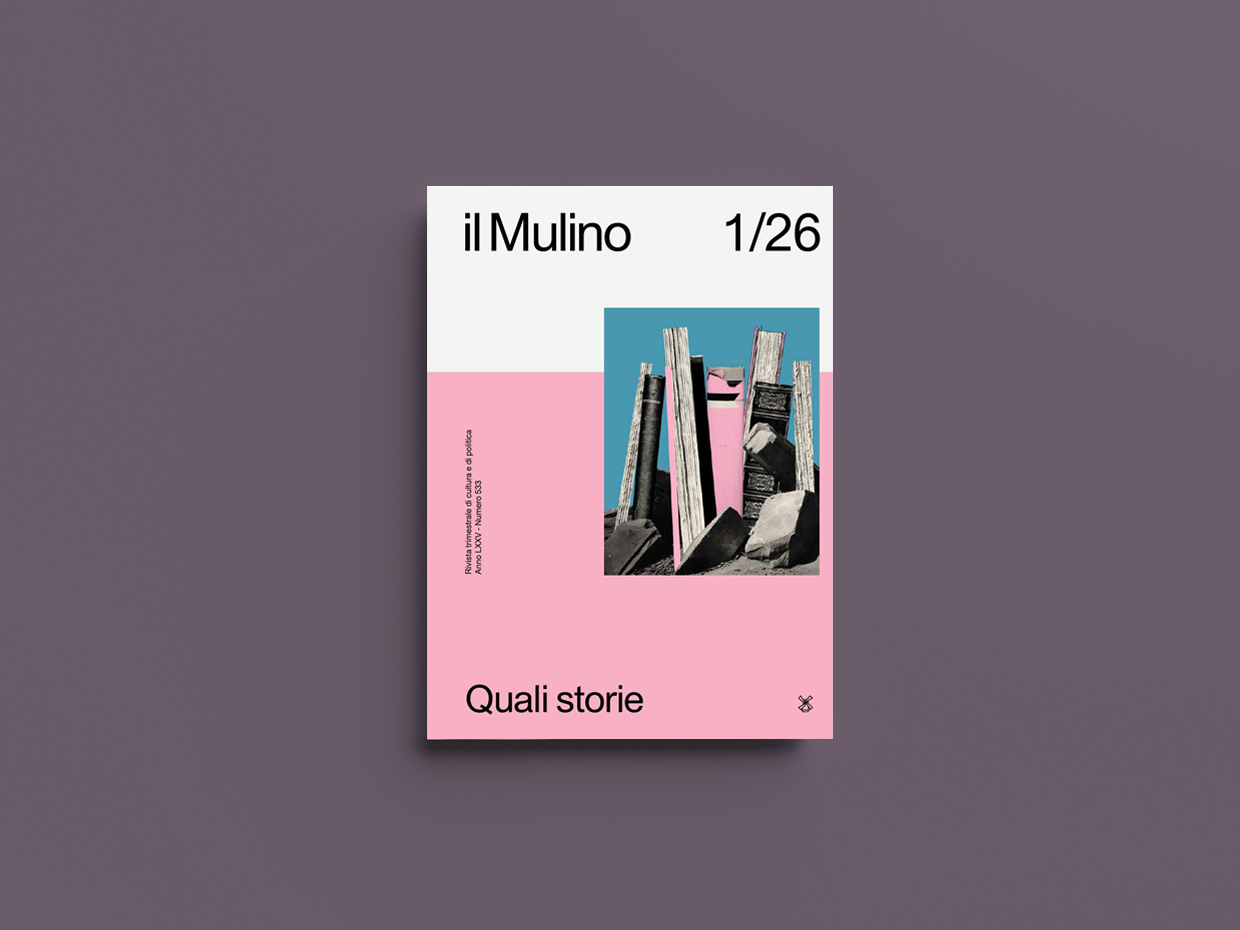
Both ‘cyclical’ and ‘teleological’ views of history offer ways to learn from the past, writes Paolo Pombeni in issue of Il Mulino (Italy) focusing on the uses of history in education and the media.
A cyclical view allows us to see certain problems as recurrent, and so to draw on the resources provided by past efforts to deal with them. A teleological view allows us to find in the past confirmation that we’re moving towards a better state. But in today’s ‘age of individualism and singularity’, both approaches to the past are being abandoned. Simultaneously, a collapse of hierarchies within the academic discipline of history, and an explosion in the quantity of research being produced, has led to a ‘Babel’ of scholarship.
The most fundamental question is how students first encounter history in school, writes Pombeni. In particular: ‘which history is needed to help develop the tools of knowledge at our disposal?’
Encyclopaedism won’t work: history is simply too vast. Students should instead start from a past that can be understood using ‘concepts and knowledge’ with which they already have ‘some connection’. Moralism, too, must be avoided, since it restricts a student’s ability to understand ‘complex realities’ and encourages them to judge the past negatively. The purpose of history isn’t to condemn. Rather, Pombeni insists, it is to teach us ‘empathy and compassion’.
Teaching history
How should we teach history? More than most disciplines, writes Francesco Rocchi, history is entangled with ‘politics, personal memory, and differing systems of values’. When teaching, historians must work out how to package ‘this mass of perspectives, approaches, and provisional conclusions’ into a coherent curriculum.
Current teaching guidelines often reflect the assumption that, if students are just taught the facts, they will learn to think critically. But, in fact, students already have lots of ‘personal ideas and beliefs’, some of which might be ‘bizarre or counterproductive’. After all, children actively build their own ‘conceptual structure’.
So how should a history teacher proceed? Rocchi emphasizes that teaching should never just be a matter of ‘lecturing’ or ‘indoctrination’. Rather, teachers should offer ‘a continuous, iterative cycle of feedback and dialogue’. That is the only way towards a pluralistic and inclusive teaching practice that genuinely respects students.
History of science
The history of science has a ‘marginal’ role in Italian education, writes Monica Azzolini, but in fact is ‘an essential instrument for understanding the challenges of the present’.
Azzolini gives three examples to demonstrate its worth. In the case of botany, historians of science have used Italy’s remarkable herbarium and museum collections to understand ‘long-term ecological changes’. Botanic gardens have also enabled historians of science to explore colonial history, demonstrating ‘how the scientific practices of the past continue to shape our institutional and cultural present’. Finally, because historians of science ‘interrogate the social, cultural, and ethical consequences’ of innovation, their work is crucial ‘for developing a more conscious, responsible, and inclusive use’ of artificial intelligence technologies.
In each case, the history of science does more than ‘reconstruct the past’: it ‘provides conceptual and material tools for guiding contemporary decisions in crucial areas’. We’re currently seeing a ‘progressive devaluation’ of the humanities, making it more important than ever to ‘reintegrate the history of science into public discourse’.
Popular history
People often complain that television has ceased to play any role in teaching history. But Luca Barra and Matteo Marinello insist that this isn’t true: in absolute terms, the amount of high-quality history programming has grown enormously in recent years.
But although there’s a lot of history on TV, ‘depth and complexity’ diminish as history programmes ‘hybridize’ with entertainment. This leads to a ‘continuous negotiation’ between the rigour of the discipline and the demands of the television format. Producers often feel the need to establish a ‘direct link’ with the present; certain historical periods are preferred over others; and presenters must negotiate between the roles of historian and entertainer.
Political history – what’s sometimes called ‘dad history’ – is particularly popular. But as Barra and Marinello observe, this isn’t because of conservative tastes, but because the popularity of political history is ‘an assertion of relevance’, a ‘route for reconnecting with the present’ and ‘rediscovering less familiar historical figures’. While television history makes ‘inevitable and necessary compromises’, it is also offers comfort in ‘an ever more uncertain contemporary moment’.
Marcel Gauchet
The historian and political philosopher Marcel Gauchet has always gone against intellectual fashion. In a short interview, Gauchet discusses the relationship between history and democracy, the political history of religion, his own career, his colleague Pierre Nora, cancel culture, and the role of history in the current intellectual climate. He offers a vigorous defence of history as ‘the most powerful instrument of democratic peace-making at our disposal’, if we can only use it well.
Review by Cadenza Academic Translations
